
Free
$0
Basic plan without insights.
- 3 entries a day
- Mood calendar
- Streaks and milestones
- Shareable cards
- Data encrypted on your device
A journal that guides you in seven steps.Get to know yourself.Handle what you feel.
Take a moment for yourself. MindLogs helps you sort out what you feel, recognize thoughts that hold you back and find other ways to handle what happens. Write or dictate, step by step.
 Thinking Trap Detected
All-or-nothing thinking
What it is
Journaling means writing about what you live through, think and feel in order to understand yourself. With MindLogs, each entry helps you make sense of your emotions, recognize the thinking traps that affect your well-being and build your emotional intelligence.
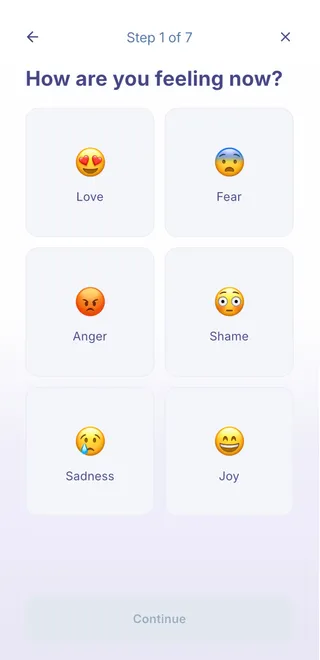
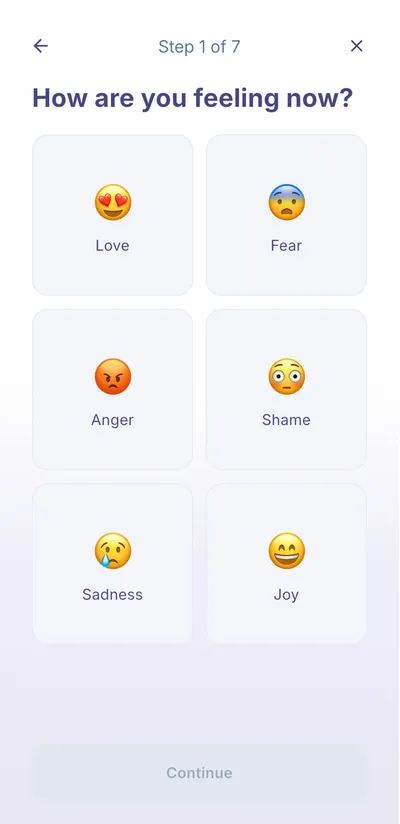
Understanding how you feel starts with expressing it. MindLogs guides you with questions to sort out what happened and what you thought. Write or dictate by voice, at your own pace.
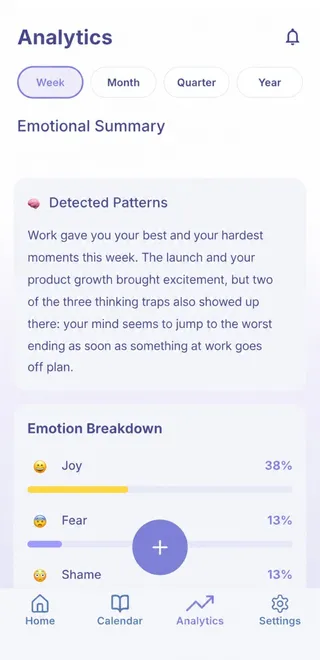
MindLogs helps you spot thinking traps in what you write and suggests other ways to read the situation, so you can respond to what happens with more perspective.
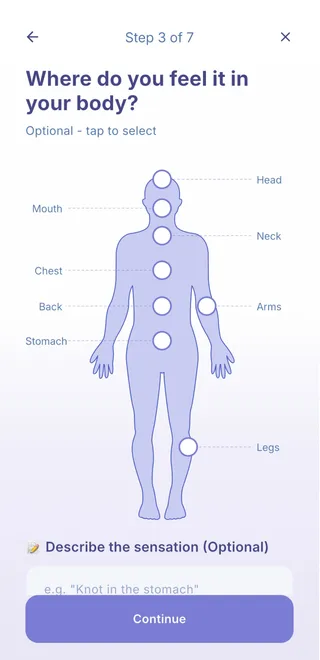
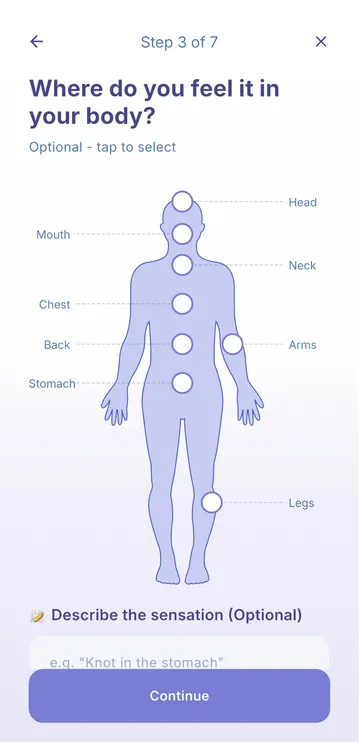
A knot in your stomach, tension in your shoulders. Identify where you feel what you feel. Paying attention to those signals helps you recognize your emotions and see them coming.
How it works
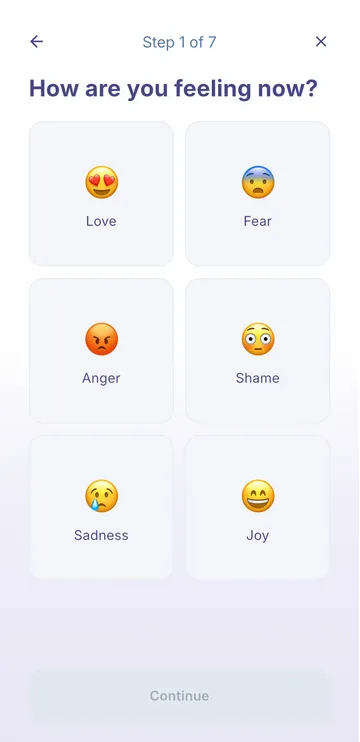
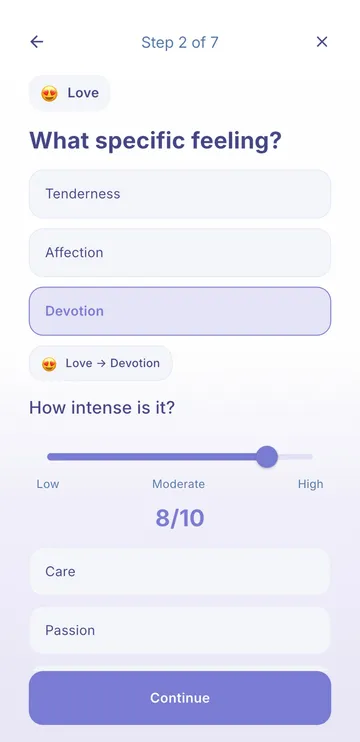
MindLogs guides you to identify and process your emotions step by step.
Choose what you feel from 6 basic emotions.
Identify the specific feeling within that emotion.
Locate where you feel that emotion in your body.
Describe the context in which the emotion comes up.
Explain what happened to make you feel this way.
Identify the thought linked to the emotion.
Describe how you reacted or want to react.
The difference
MindLogs looks for your cognitive distortions: the mental shortcuts you take without noticing that end up reinforcing exactly what hurts. Then it suggests a concrete way out.
MindLogs looks at all your information together.
The specific distortion behind that thought.
A reflection or an action you can take today.
Features
A structured process that helps you identify and process your emotions step by step.
Get personalized analysis of your thought patterns and suggestions to improve.
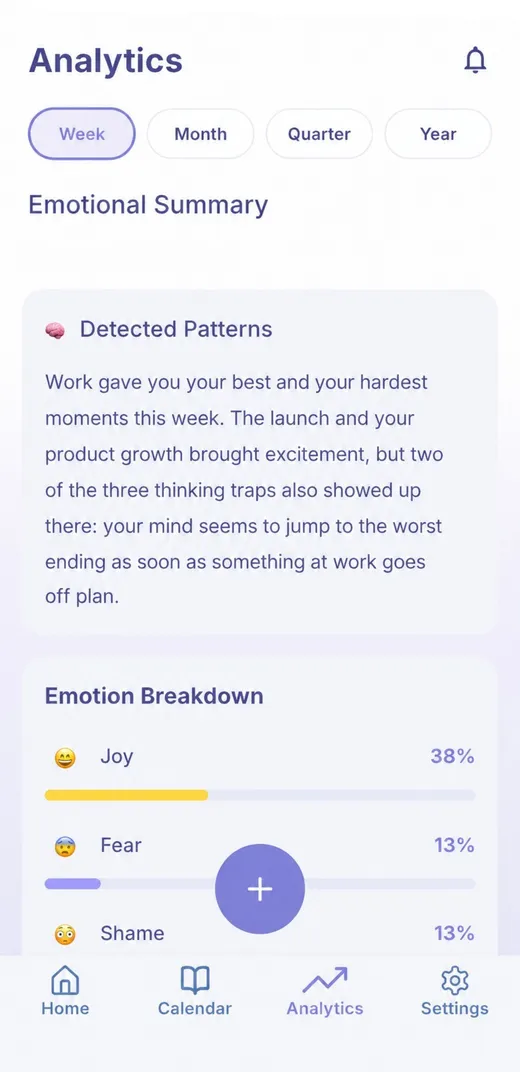
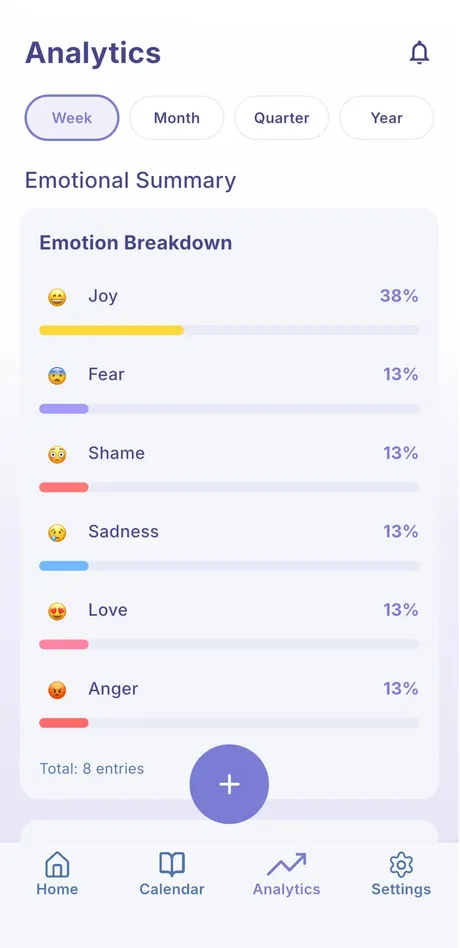
Weekly, monthly, quarterly and yearly reports on how your emotions evolve, powered by AI.
See your emotional state day by day in a calendar of emojis and colors.
Stay motivated and consistent with a milestone system.
Celebrate your progress with personalized cards you can share with anyone.
Insights and progress
MindLogs turns your entries into reports you can read at a glance so you can see how your emotional intelligence grows.
Which emotions dominated each period.
Weekly, monthly, quarterly and yearly, with practical suggestions.
Compare periods to see how your emotional well-being changes.
A pattern you can see is a pattern you can change.
Science and privacy
Our method is backed by 14 peer-reviewed studies on expressive writing and emotion regulation.
Your journal never leaves your phone. No external servers, no third-party access. Your privacy is complete.
Every entry is encrypted with the highest security standard.
Reviews
I open it on the subway on my way home from work. Putting my worries into words means I get home feeling refreshed.
I used to think journaling was for other kinds of people. But this is like having a guide that makes you reflect when you feel you can't keep it together.
The first time it flagged "mind reading" it really stung. But now I can even tell when other people fall into that loop.
It took me a week to get into the habit, and at first the body step didn't seem necessary. Now it's the one I use most, and it has helped me anticipate and handle my emotions better.
It's helping me improve my emotional intelligence, because I've realized how many unfounded thoughts we have.
I write at night before bed. The regular reports help you take life much more calmly and optimistically.
Sometimes something gets to you and you can't explain why. Writing about what happened, what you thought and how you felt gives you room to stop and look at it.
Journaling turns that reflection into a habit. With MindLogs, you get questions that help you go deeper and notice which situations and thoughts shape your well-being.
MindLogs walks with you from the first emotion to your reaction, so you can understand the whole experience:
Write or dictate by voice. Each entry is a chance to listen to yourself and connect what happens to how you think and feel.
Assuming you know what others think of you, expecting the worst or judging everything as a total success or a total failure can shape how you feel.
MindLogs helps you identify those possible traps in your entries and suggests reflections or actions to see the situation from another angle. Spotting a trap is the first step to questioning it and choosing how to respond.
Regular reports show you which patterns keep repeating and which ones you want to work on.
Many journal apps give you a blank page. If you want one that helps you understand yourself, look for these:
For understanding why some situations affect you so much. For noticing thoughts that keep coming back. For giving yourself a few minutes and learning to handle what you feel.
MindLogs is an emotional well-being tool. It does not replace care from a mental health professional.
Plans
$0
Basic plan without insights.
$59.99/year
Just $1.15 a week
It's an app for writing about your experiences, thoughts and emotions so you can understand yourself better. MindLogs guides you through seven steps to sort out what happened, understand how it affects you and reflect on how you respond.
Yes. The free plan lets you log up to three entries a day. Premium adds instant feedback on your emotions and thoughts, plus regular reports that help you spot your thought patterns and build emotional intelligence.
MindLogs helps you recognize possible thinking traps in your entries and suggests reflections and actions to deal with what worries you. Regular reports show you the patterns that repeat and how they affect your emotions.
Yes. MindLogs is fully available in English and Spanish, including the guided questions, the feedback and the reports. Write in whichever language feels most natural to you.
Both are about writing about your life. MindLogs adds guidance to explore what you felt, what you thought and how you reacted, so you can understand your experiences and notice patterns that affect your well-being.

Download MindLogs on the App Store or Google Play. The free plan includes the seven steps, the mood calendar and streaks. No account, no card.