
How Do You Write a Diary? Steps and Two Example Entries
In short
To write a diary, choose paper or your phone, pick a set time right after something you already do every day (dinner, for example) and start with five or 10 minutes. In each entry, write the date, then write without editing: what happened, how it felt and what you take away from it. Over time, rereading it will show you the thought patterns that keep repeating in your life and how they shape what you feel.
What a diary is and what it's for
A personal diary is a notebook, or an app, where you write down what happens to you and what you think about it. You write it for yourself, so that no one else reads it. To learn how to write a diary, you don't need to be a writer, and your entries don't need to be pretty.
It helps you sort out your thoughts when things pile up, remember, months from now, what days that feel ordinary today were like for you and see, over time, what keeps repeating in your life. Plenty of things that seem huge today look smaller once they're written on a page, and others that went by quietly turn out to matter when you reread them.
Some of the benefits of keeping a diary have been measured: in a review that brought together several studies with healthy people, writing about what they felt improved their psychological well-being, their self-reported physical health and how well they functioned day to day.
You may have heard this called journaling. That's the name people use today for the habit of writing to understand yourself, with more guided formats and prompts to help you get going: the journaling guide covers the types and examples. And if what you mostly want is to understand what you feel, there's a version focused on that: the emotional journal.
How to write a diary step by step
Starting a diary depends less on motivation than on making a few decisions before you open the notebook.
Choose paper or your phone
Both work, and the right one is the one you'll actually use. Paper takes you away from the screen and helps a lot of people slow down, with no notifications getting in the way. Your phone is always with you: you can jot something down on the train or in the checkout line, right when it happens, and lock your diary with a password.
Before you decide, think about where you'll really write (in bed, on the couch, on the train) and which of the two lets you relax knowing no one else will read it. If the notebook ends up in a drawer and the app never gets opened, the format wasn't the problem.
If you go with your phone, MindLogs is a journaling app that takes you through seven steps in each entry, and you can dictate it instead of typing. What you write is stored encrypted and never leaves your phone.
Always write after something you already do
Find a set time that comes right after a habit you already have: your morning coffee, dinner or your evening shower. If the time depends on feeling like it or remembering to, your diary won't survive the first busy week.

In a study on how habits form, 96 people chose something to do every day at the same moment, for example "after breakfast," and repeated it for 12 weeks. Being more consistent was linked to the habit becoming more and more automatic. That's the trick behind "after": what you already do every day becomes the cue for what you want to add.
You can turn it into a sentence and repeat it to yourself word for word: after dinner, I write, or after my coffee, I write. Pick yours, always after something you do every single day.
Start with five or 10 minutes
For the first few days, write a little and go easy on yourself. Five or 10 minutes is enough to start, and the goal of those first entries isn't for them to be deep: it's for them to exist.
If you aim for half an hour from day one, the first night you get home tired you'll already have an excuse not to open your diary. Better to stop while you still want to keep going than to finish the entry drained. Longer entries will come once writing is part of your day.
Write the date and the first thing that comes to mind
The one thing every entry should have is the date. If you like, add where you are: a year from now it'll help you picture where you were. Without a date, when you reread you won't know what came first or when it happened.
And you don't need to open with "Dear Diary" or introduce yourself, because you're the only reader. Start with whatever is on your mind, even if it's "no idea what to write today."
Don't edit and don't write for anyone else
It doesn't matter if you make a typo, leave a sentence unfinished or repeat yourself: no one is grading it. If you stop to polish every sentence, you lose track of what you were thinking.
That said, to write without a filter you need to know no one else will read it. Just picturing someone you live with flipping through the notebook is enough to make you soften what you say, and you end up with the sanitized version of your day. Keep the notebook where no one will look for it, or use an app with a password.
The parts of a diary entry
When you're not sure how to write in a diary about what happened, these three parts of a diary entry give you a script for almost any day. Use them when they help and skip them when they don't.
- What happened. The facts, with a concrete detail or two: who, where and what was said.
- How it felt. What you felt and what went through your head in the moment, before you thought it over.
- What you take away. What you understand now, what you'd do differently or what you want to remember about this day.
The third part is the one that deserves the most attention. In a classic psychology study, writing about experiences that had affected the participants was linked to better physical health, especially in those who used words like "because" and "I realize" more and more as the days went on. They wrote about what they felt and, at the same time, tried to explain to themselves why it had happened.
And don't worry if some days only the first part comes out, just the facts. It's still an entry, and it counts.
Diary entry examples
Here are two diary entry examples from very different days: one with something to tell and another where, on the surface, nothing happened.
A day with something to tell:
Tuesday, October 14. Met up with Dan after work today. Hadn't seen him in over a year. We were supposed to grab a quick beer and ended up talking for three hours. He told me he's quitting his job, and he said it so calmly I didn't believe him at first. What I keep thinking about is how I reacted: instead of asking what he's excited about, I hit him with a bunch of questions instead: did he have any savings, wasn't he scared? Where did that come from? On the way home I felt down, like I'd left something behind. I think I'm jealous. He went for it and I haven't. Next time someone tells me something like that, I need to remember to ask what they're excited about first.
Notice what makes this entry work: two concrete details (the three hours, the questions about savings) and a question that comes up halfway down the page, one the writer didn't have in mind when they sat down. And it ends without a neat conclusion, with something small to try next time.
A day when "nothing happened":
Thursday, October 23. Nothing happened today, really. Work, a quick lunch, some TV. Except for one thing: walking the dog tonight, every window in the building was lit except the one on the second floor, where the neighbor with the geraniums lives. It made me sad and I didn't know why. Now I get it: I haven't seen her heading out for her morning walk in weeks. I should knock on her door and ask if she's OK, but I can't bring myself to bother her. Noted.
The empty day is the one that most tempts you to close the notebook without writing. But look at what happens when you write anyway: it starts with nothing to say and, halfway through, what's on the writer's mind shows up: the neighbor they haven't seen and the door they can't bring themselves to knock on. Without the diary, they'd have forgotten it by the next day; now it's on paper, as something still to do.
What to write in a diary: ideas to get started
On days when you don't know what to say, don't wait for something to come to you. Pick one of these ideas and start there:
- Something that made you laugh today, exactly as it happened.
- A conversation you're still thinking about hours later.
- What's on your mind before you fall asleep.
- Something from today you want to remember a year from now.
- Something you learned today, however small.
- A decision you've been putting off and what's holding you back.
- How you'd like next week to go.
- A memory that came back to you today out of nowhere.
- A letter to anyone you like, one you'll never send.
- Something that surprised you about yourself in the past few weeks.
And if you'd rather use a sentence starter, these get an entry going in seconds:
- Today I remembered…
- I can't stop thinking about…
- Something I haven't told anyone is…
- If I could relive just one hour of today, it would be…
Some days it's the other way around: something has shaken you and you can't get it out of your head. For those days, therapeutic writing is a better fit, an exercise designed for writing about the same topic several days in a row.
How to keep a diary past the first week
If you've tried before and quit after a week, chances are you didn't have a plan for the days you didn't feel like it. This is what keeps the habit going once the early excitement wears off.
Skipping a day doesn't break anything. In the study of the 96 people, missing a single day didn't make a noticeable difference in how the habit formed. What usually sinks a diary is the guilt over the missed day, so pick it back up the next day without making up for it: don't write twice as much or apologize to the page.
The habit takes as long as it takes. In that same study, how long it took the habit to become automatic ranged from 18 to 254 days depending on the person. So if writing still feels like an effort after three weeks, that's normal: keep going, and one day you'll find yourself writing without having planned to.
On bad days, one line. Lower the bar instead of skipping the day: "wiped out, more tomorrow." That keeps you in the habit of opening your diary without turning it into one more chore.
Keep your diary where you can see it. The notebook on your nightstand, the app on your phone's home screen. It sounds trivial, but if the notebook lives in a drawer, it's easy for days to go by without you thinking of it.
If you get bored, change the question. If you notice you've been writing the same thing for days, change the kind of entry: write about a memory that came back to you out of nowhere, or write the letter you're never going to send.
Rereading what you wrote
When you reread entries from a few weeks back, you find out what you always complain about, who you mention most and what you've changed your mind about, even things that felt settled at the time. You also rediscover moments you had completely forgotten, and sometimes they change how you remember that time in your life.
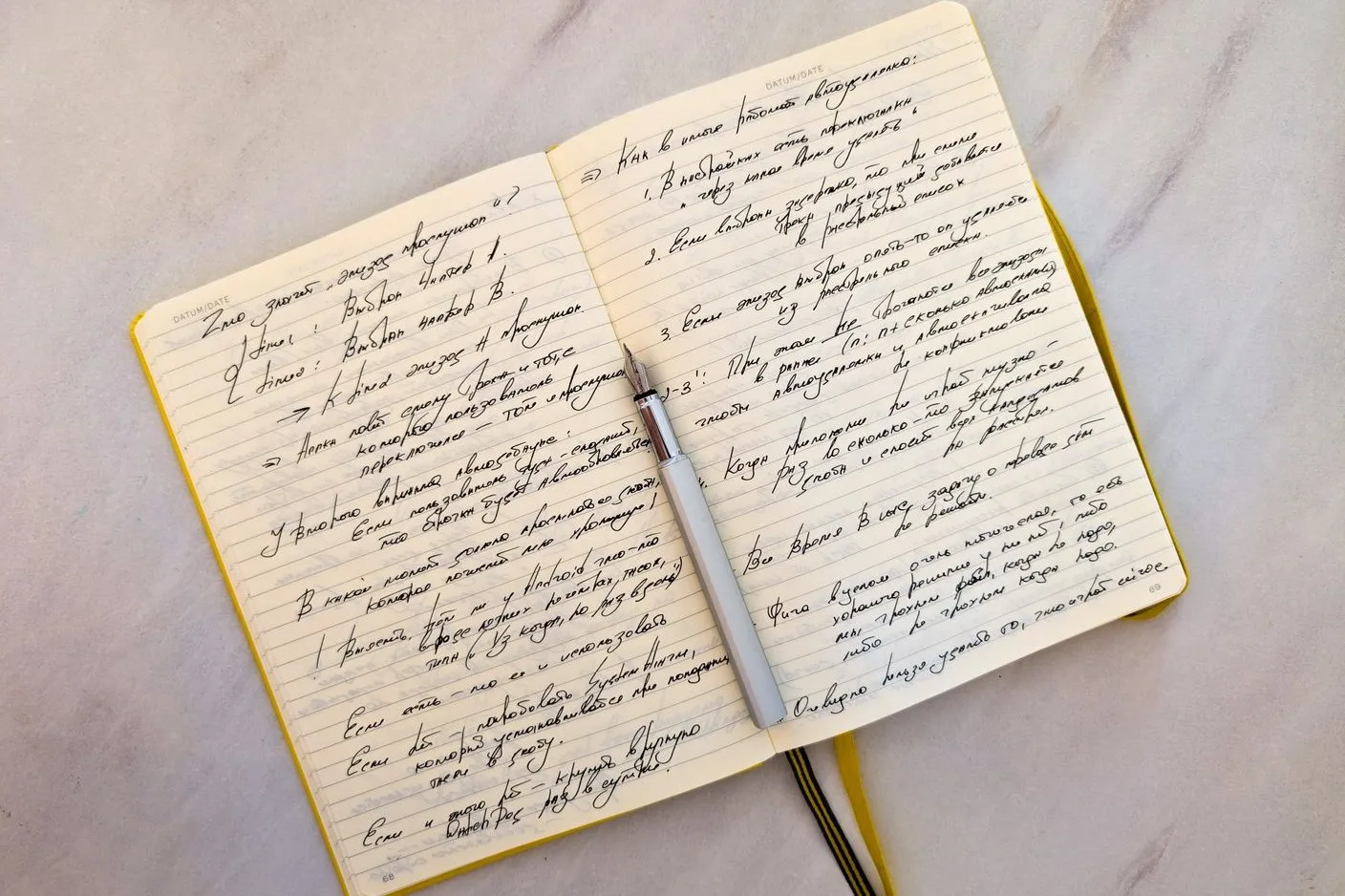
A simple rule of thumb: reread once a month, or whenever you finish a notebook. Read your entries with the patience you'd have with a friend showing you old letters. And if all you find when you reread is reasons to criticize yourself, ask what has changed since then instead of what you did wrong.
Conclusion
Keeping a diary takes less than you'd think: a set time (right after something you already do every day), a few minutes and permission to write badly. With that, the first entry gets written today and the 10th writes itself.
And what makes it worthwhile over the months is the question you close each entry with: what do you take away from today? The pages where you ask it are the ones that, when you reread them, show you how you've changed.
Frequently asked questions
How do you start a diary?
Start today with a simple entry: write the date, what happened and how it made you feel. You don't need to introduce yourself, explain why you're starting or fill a whole page. A few lines and you've started your diary.
What should I write if nothing happened today?
Write about something small: a conversation you had, something you saw on the street or whatever is on your mind right now. One or two lines are enough. On days that seem empty, what is actually worrying you sometimes shows up.
Is it better to write by hand or on my phone?
Neither one wins. Paper keeps you away from screens and helps a lot of people slow down; your phone is always with you and you can lock it with a password. What matters is that it's within reach and that you can write knowing no one else will read it.
Do I have to write every day?
No: a pace you can keep up beats a daily rule you'll drop in two weeks. In a study on how habits form, skipping a day didn't derail the process. If you miss one, pick it back up the next day as if nothing happened.
How long should a diary entry be?
Whatever length comes naturally: anywhere from one line to several pages. To start, five minutes is enough, and 10 is plenty.
Pau Forner
Author and entrepreneur specializing in digital marketing and emotional intelligence. Author of Dirige Tu Vida (Editorial Planeta), a bestselling book on social and emotional skills.